
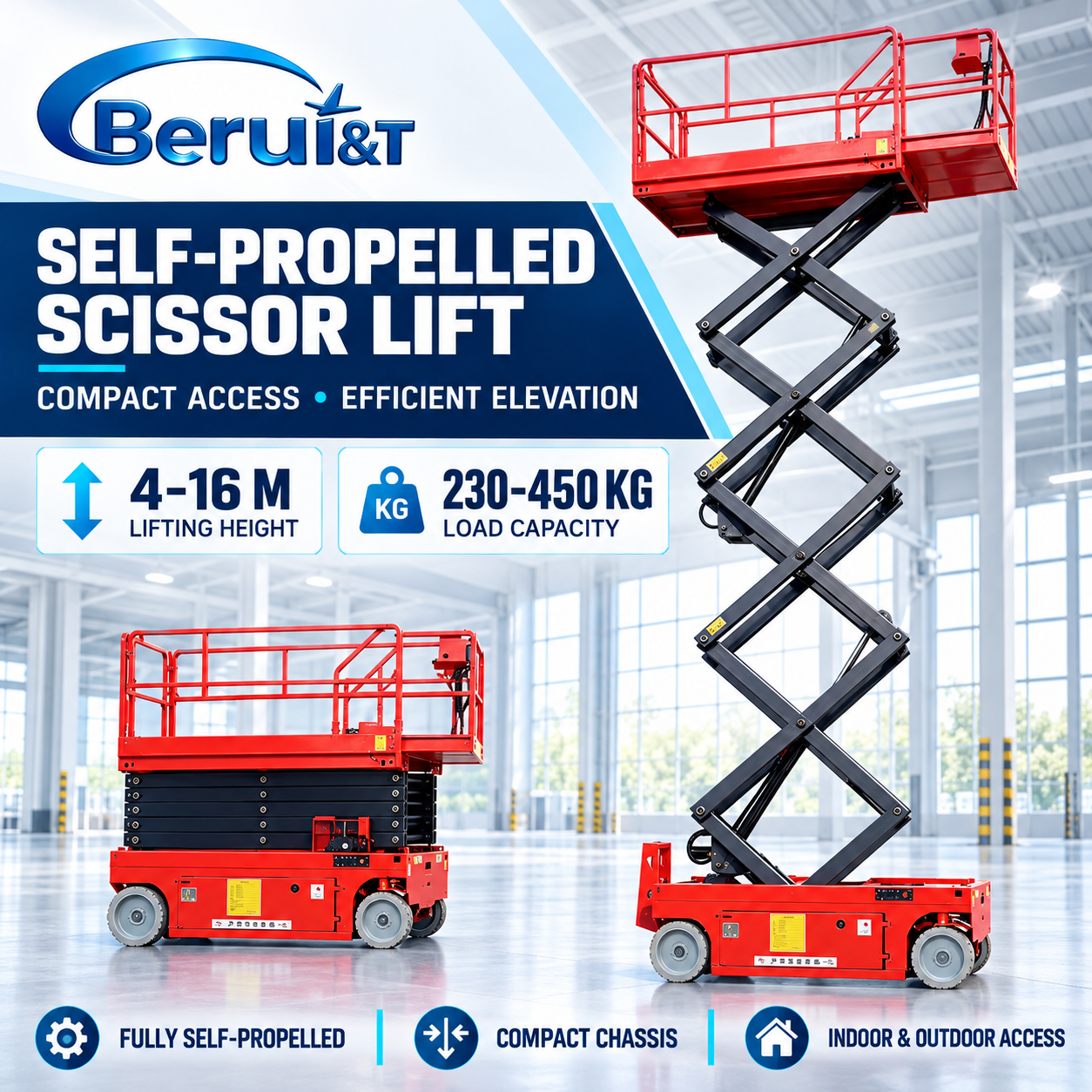
Self-Propelled Scissor Lifts for Warehouse Maintenance: Benefits and Selection Tips
A self-propelled scissor lift is a practical solution for warehouse maintenance, factory operations, and indoor aerial work. With electric drive, stable vertical lifting, and convenient platform controls, this type of aerial work platform helps operators access elevated work areas without repeatedly repositioning equipment manually.
From overhead lighting installation to equipment inspections and facility maintenance, self-propelled scissor lifts are widely used in industrial and commercial environments. However, choosing the right model requires more than comparing lifting heights. Platform capacity, machine dimensions, floor conditions, and daily operating requirements are equally important.
In this guide, we explain the main advantages of self-propelled scissor lifts for warehouse applications and the key factors to consider before purchasing

1. What Is a Self-Propelled Scissor Lift?
A self-propelled scissor lift is a mobile elevating work platform designed to raise personnel and their tools vertically to an elevated working position.
Unlike manually pushed scissor lifts, self-propelled models feature a powered driving system. Operators can control lifting and lowering from the working platform, while driving and steering functions help reposition the equipment efficiently within the manufacturer’s operating limits.
Most electric models use rechargeable batteries and a hydraulic lifting system. Their compact structure makes them suitable for many indoor maintenance and installation applications.
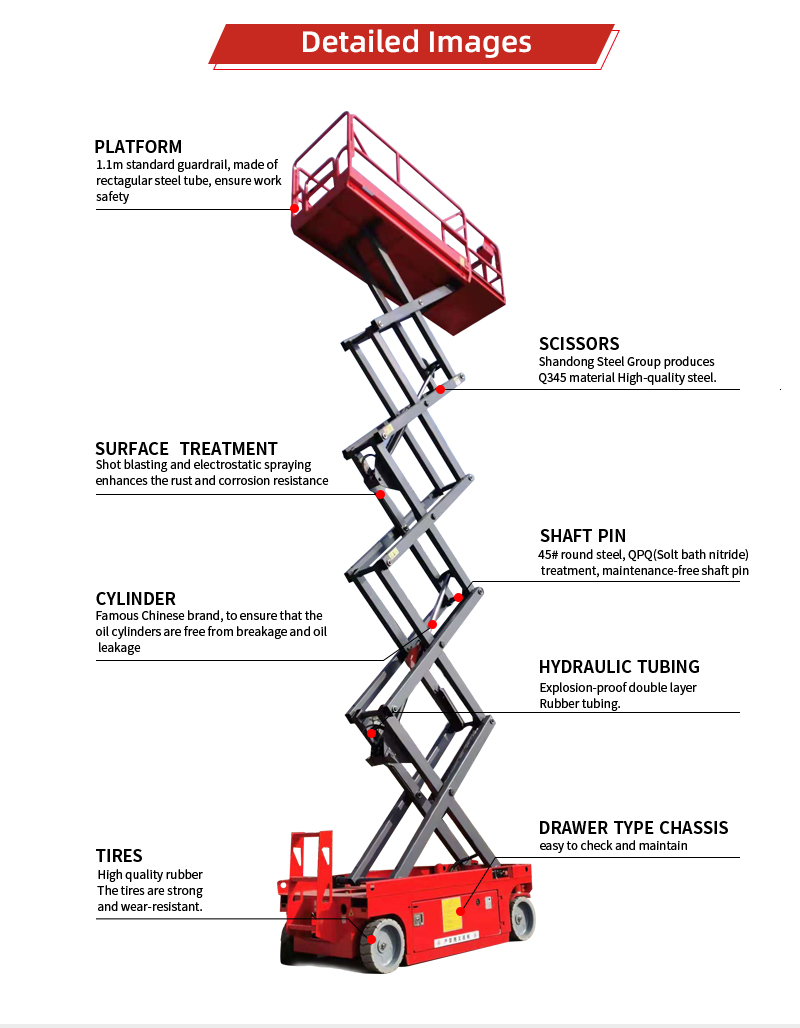
Typical features may include:
- Electric driving and lifting functions
- Platform and ground control systems
- Scissor-type lifting mechanisms
- Protective platform guardrails
- Rechargeable battery systems
- Extendable working platforms on selected models
Actual features and specifications vary by model.
2. Key Benefits of Self-Propelled Scissor Lifts for Warehouses
Efficient Movement Between Working Areas
Warehouse maintenance often involves multiple locations, including lighting fixtures, overhead pipes, ventilation systems, and structural components.
A self-propelled scissor lift allows operators to move the equipment between work areas without manual pushing. This can reduce repositioning time and improve efficiency during routine maintenance.
Compact Design for Indoor Applications
Warehouses and factories frequently contain storage racks, equipment, and limited access routes.
Compact electric scissor lifts can be useful in these environments, provided the machine dimensions are suitable for the available aisle width, doorways, and turning space.
Before selecting a model, buyers should check the overall machine width, stowed height, and turning requirements.
Electric Power for Indoor Work
Battery-powered scissor lifts produce no engine exhaust at the point of use, making them particularly suitable for indoor applications where ventilation and environmental conditions are important.
Electric operation also supports convenient daily maintenance and repeated lifting tasks.
Battery capacity, charging requirements, and operating duration should be evaluated according to the expected workload.
Stable Vertical Access
The scissor lifting mechanism provides vertical platform movement for work directly above or close to the machine.
A properly selected working platform gives operators space for necessary tools and materials while carrying out installation, inspection, and maintenance tasks.
The machine must always be operated within its rated capacity and according to the manufacturer’s instructions.
3. Common Applications in Warehouses and Factories

Self-propelled electric scissor lifts can support a wide range of industrial aerial work tasks.
Warehouse Lighting Maintenance
Operators can use suitable scissor lifts to access overhead lighting fixtures for installation, inspection, and replacement.
Factory Equipment Installation
Scissor lifts provide elevated access for certain equipment installation, electrical work, and maintenance activities in manufacturing facilities.
Ventilation and Pipe Maintenance
Facilities often require periodic inspection of overhead ventilation systems, pipes, and other building services. Electric scissor lifts can help maintenance personnel reach these locations.
Warehouse Rack Inspection
Scissor lifts can provide access for inspecting elevated storage racks and associated building structures. The equipment should be used only for its intended personnel-access functions, not as a substitute for a materials-handling lift.
Commercial Facility Maintenance
Shopping centers, exhibition halls, distribution centers, and other commercial buildings may use compact scissor lifts for lighting, cleaning, and overhead maintenance tasks.
4. How to Choose the Right Self-Propelled Scissor Lift
Selecting the correct lift is essential for efficient operation and appropriate jobsite use.
Step 1: Confirm the Required Working Height
Buyers should distinguish between platform height and working height.
Platform height refers to the vertical height of the platform floor above the ground. Working height is an estimated height that an operator can reach while standing on the platform.
These two measurements are not interchangeable.
For example, when comparing lifts for a high warehouse ceiling, first identify the actual working position and required reach. Then verify the manufacturer’s specified platform and working heights rather than choosing a machine based only on the model number.
Step 2: Check the Rated Load Capacity
Load capacity should account for the combined weight of personnel, tools, and materials carried on the platform.
The required capacity depends on the work being performed and the model’s rated limits.
Buyers should also check any separate load restrictions applying to an extended platform deck.
Step 3: Evaluate Machine Dimensions
Before purchasing, measure the intended working environment.
Important considerations include:
- Warehouse aisle width
- Doorway clearance
- Machine turning space
- Overall machine height when lowered
- Available working space around the equipment
A lift with a suitable working height may still be impractical if it cannot move through the building safely.
Step 4: Consider Ground and Floor Conditions
Indoor warehouses often have concrete floors, but floor strength, slopes, obstacles, and surface conditions can vary.
Check the floor’s load-bearing capacity and the equipment’s wheel loads. For sensitive floors, ask whether suitable non-marking tires are available.
Self-propelled scissor lifts designed for smooth indoor surfaces should not automatically be treated as rough-terrain machines.
For challenging outdoor terrain, a properly rated rough-terrain or crawler scissor lift may be a more suitable alternative.
Step 5: Review Battery and Control Systems
For electric models, compare the charging system, battery configuration, available operating time, and control functions.
Buyers should also confirm the availability of ground controls, emergency-stop functions, and the manufacturer’s documented emergency procedures.
The most suitable configuration depends on the working environment and expected frequency of use.
5. Self-Propelled Scissor Lift vs. Manual Push Scissor Lift
Both self-propelled and manually pushed scissor lifts can be used for elevated access, but they serve different operational requirements.
A self-propelled scissor lift is generally more convenient when work involves frequent movement between multiple locations. Its powered driving system reduces the need for manual repositioning.
A manually pushed scissor lift may be appropriate for certain occasional or stationary maintenance tasks, particularly when powered travel is not required.
The choice should be based on jobsite conditions, available space, required height, frequency of use, and equipment specifications rather than on lifting height alone.
6. Important Safety Considerations
Safe operation depends on equipment selection, trained personnel, and proper site conditions.
Before using a self-propelled scissor lift:
- Inspect the machine and its safety functions according to the manufacturer’s instructions.
- Confirm that the ground or floor can support the equipment.
- Check for overhead obstacles and electrical hazards.
- Keep within the rated platform load capacity.
- Ensure guardrails and access gates are correctly secured.
- Follow the manufacturer’s rules for driving with the platform elevated.
- Observe applicable site safety procedures and local regulations.
Do not assume that every electric scissor lift is suitable for outdoor use, uneven terrain, or operation in windy conditions. Always confirm the individual model’s ratings and operating limitations.
7. Self-Propelled Scissor Lift Solutions from Berui Machinery
At Berui Machinery, we supply self-propelled scissor lifts for industrial maintenance, warehouse applications, construction projects, and commercial facility work.
We understand that different projects have different requirements for working height, platform capacity, equipment dimensions, and operating environments.
When selecting equipment, it is important to match the lift configuration to the actual jobsite conditions.
To help us recommend a suitable model, you can provide:
- Required platform height or working height
- Expected number of operators and total platform load
- Indoor or outdoor working environment
- Available doorway and aisle dimensions
- Destination country and project requirements
Our team can help you review available equipment options based on these details.
8. Frequently Asked Questions
Can self-propelled scissor lifts be used indoors?
Yes. Electric self-propelled scissor lifts are commonly used for indoor maintenance and installation. However, the selected model must be suitable for the available space, floor conditions, and required working height.
What is the difference between platform height and working height?
Platform height measures how far the platform floor rises above the ground. Working height estimates the reach available to an operator standing on that platform. Always compare manufacturers’ stated measurements carefully.
Can a self-propelled scissor lift travel while elevated?
Some models allow elevated travel under specified operating conditions. Restrictions vary by machine, so operators must follow the manufacturer’s instructions.
Are electric scissor lifts suitable for rough outdoor ground?
Not all of them. Compact indoor scissor lifts are generally intended for suitable level surfaces. For rough or uneven outdoor environments, consider equipment specifically designed and rated for those conditions, such as a rough-terrain or crawler scissor lift.
What information should I provide when requesting a quotation?
You should specify your required lifting height, platform capacity, intended application, working conditions, destination country, and any dimensional restrictions. This helps suppliers identify suitable configurations.
Conclusion
A self-propelled scissor lift can be an efficient and practical choice for warehouse maintenance, factory inspections, overhead installation, and other industrial aerial work.
When selecting equipment, buyers should carefully compare working height, rated load capacity, overall dimensions, power systems, and site conditions.
Choosing a machine that matches the actual working environment helps improve operational efficiency and supports appropriate equipment use.
Looking for a Self-Propelled Scissor Lift for Your Project?
Contact Berui Machinery for product information and a quotation.
Email: sales1@beruimachinery.com
WhatsApp: +86 17686687138
Website: https://beruimachinery.com
